
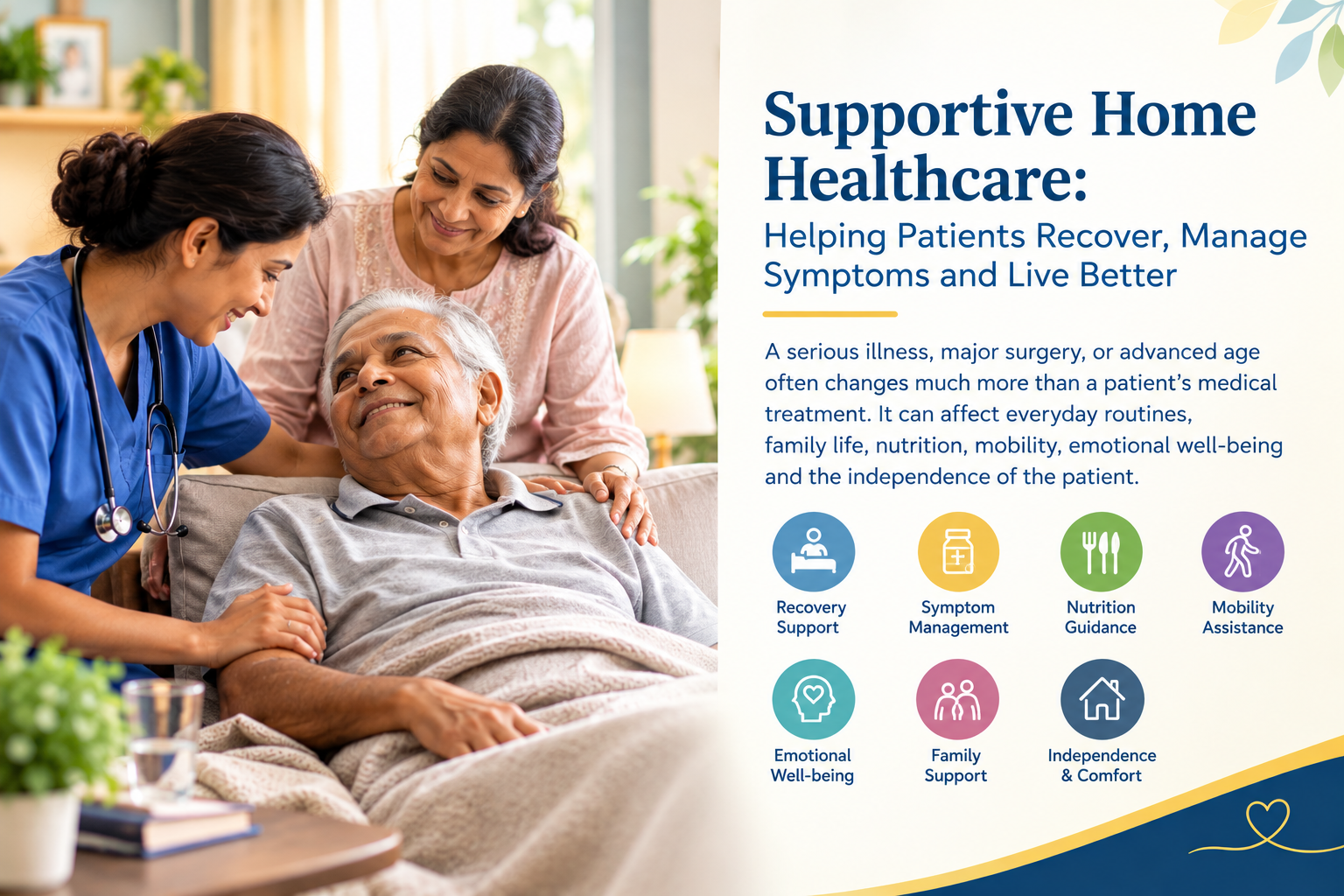
A serious illness, major surgery, or advanced age often changes much more than a patient's medical treatment. It can affect everyday routines, family life, nutrition, mobility, emotional well-being and the independence of the patient.
While hospitals and specialty centres remain essential for diagnosis, surgery, and advanced medical treatment, a significant part of a patient's ongoing care happens outside the hospital.
This is where supportive care at home can make an important difference.
Home healthcare can help patients manage symptoms, recover after treatment, maintain nutrition and mobility, receive nursing support and remain connected with their treating doctors — all within the familiar environment of home.
Supportive home healthcare refers to healthcare and practical support that helps a person cope with illness, injury, surgery, or age-related decline, and the effects of their treatment.
It does not necessarily replace hospital-based treatment. Instead, it complements treatment by addressing the patient's physical, emotional, nutritional, functional and practical needs.
Depending on the patient's condition and care plan, home-based care may include:
The objective is to create continuity between the hospital, treating specialist and the patient's home.
Ongoing treatment can involve repeated hospital visits, investigations, procedures and periods of recovery.
For elderly, frail, mobility-limited or chronically ill patients, travelling frequently to a hospital may be physically and emotionally exhausting.
A structured home healthcare programme can allow appropriate aspects of care to be delivered closer to the patient.
Home care can also help family members understand how to safely support the patient, recognize changes in symptoms and communicate important information to the medical team.
The WHO identifies palliative and supportive care as an important part of comprehensive care for serious and chronic illness, with the goal of improving quality of life and addressing physical, psychological and social needs.
A trained home healthcare nurse can become an important link between the patient, family and hospital team.
Depending on the clinical requirements, nursing support may include:
Medication support: Helping patients follow their prescribed medication schedule and monitoring for problems that require medical attention.
Wound care: Supporting patients recovering from surgery or living with wounds requiring regular dressing and monitoring.
Catheter and drain care: Providing appropriate nursing support for patients with urinary catheters, surgical drains or other devices.
Nutrition and feeding support: Helping families manage feeding requirements when patients have difficulty eating normally.
Personal care: Supporting bathing, hygiene, positioning and other activities when illness affects independence.
Monitoring: Recording relevant observations and identifying changes that should be escalated to the treating medical team.
Serious illness and its treatment can produce a variety of symptoms. These may include:
Symptom management should always be individualized according to the patient's diagnosis, treatment plan and medical condition.
A home healthcare team can monitor symptoms and coordinate with the patient's doctor when changes require medical review.
Illness, surgery, or prolonged hospitalization can sometimes result in weakness, reduced mobility, balance problems or loss of physical independence.
Home physiotherapy may help suitable patients work toward:
The rehabilitation programme should be designed according to the patient's condition and treating team's recommendations.
Nutrition is an important component of supportive home healthcare.
Some patients experience reduced appetite, difficulty swallowing, nausea, altered taste or increased nutritional requirements due to illness, surgery, or age-related conditions.
A dietitian or appropriately trained healthcare professional can help develop an individualized nutrition plan based on the patient's condition, treatment and dietary requirements.
The aim is not simply to increase food intake but to support hydration, nutritional status, strength and quality of life.
Serious illness and prolonged recovery affect families as well as patients.
Patients may experience fear, uncertainty, anxiety, frustration or loss of independence. Family caregivers may also experience physical and emotional exhaustion.
Good home healthcare therefore looks beyond medical procedures.
Care should consider the patient's preferences, dignity, emotional well-being, family circumstances and daily routine.
Home healthcare may be considered when a patient:
The appropriate level of care should be decided in consultation with the patient's treating healthcare professionals.
Medical treatment is not only about treating the disease or condition.
It is also about helping the person live as comfortably, independently and meaningfully as possible during treatment and recovery.
A well-coordinated home healthcare programme can bring nursing, medical support, rehabilitation, nutrition, symptom management and caregiver education closer to the patient.
For many families, this can transform the home from simply a place of recovery into an important part of the patient's healthcare journey.
Home is not a replacement for the hospital. When appropriately coordinated, it can become an extension of the care team.

Comments (0)