
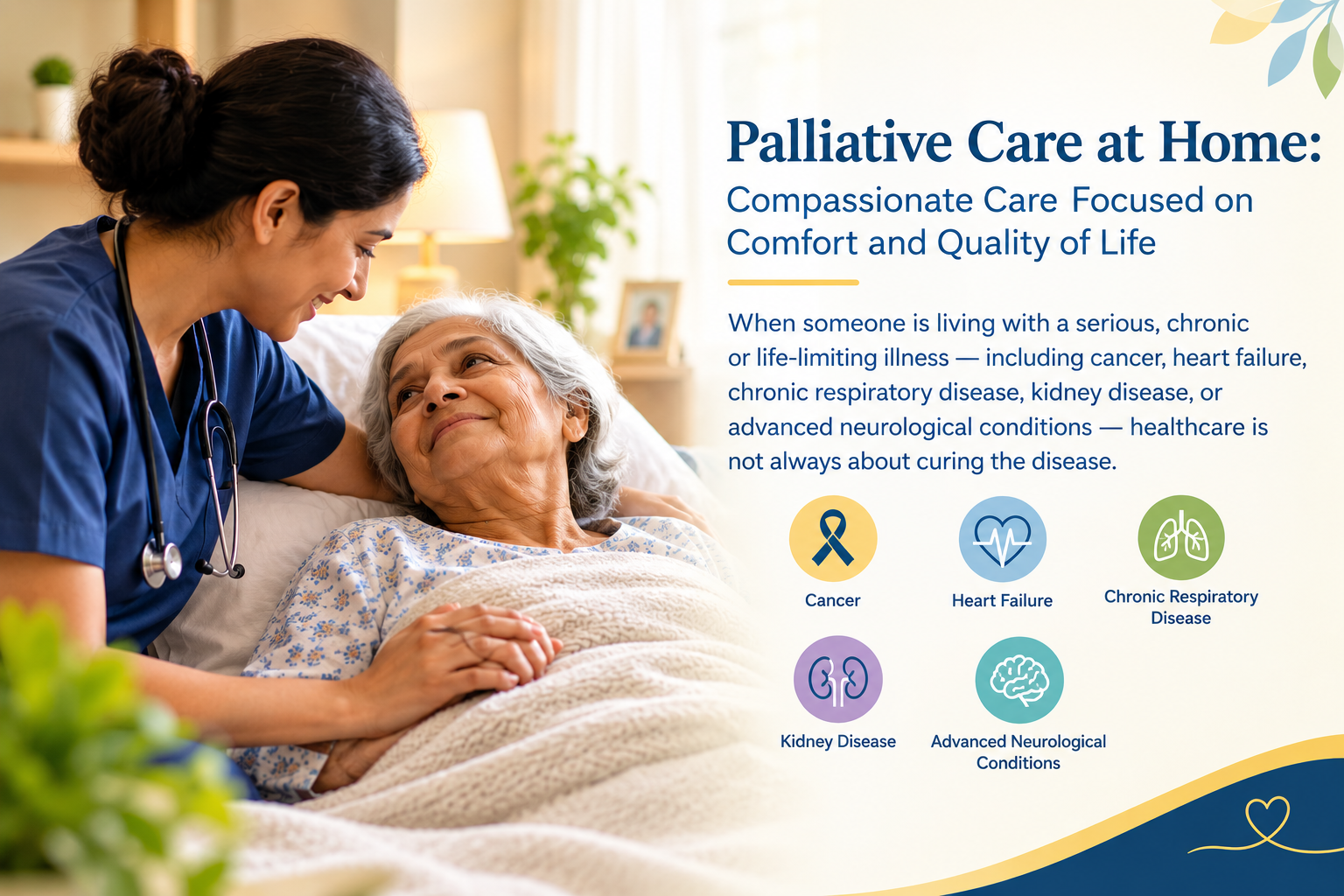
When someone is living with a serious, chronic or life-limiting illness — including cancer, heart failure, chronic respiratory disease, kidney disease, or advanced neurological conditions — healthcare is not always about curing the disease.
Sometimes the most important goals are controlling pain, reducing breathlessness, improving sleep, maintaining dignity, supporting nutrition, helping the person remain comfortable and giving the family the confidence to provide care.
This is the purpose of palliative care.
Palliative care can be provided alongside disease-directed treatment and is not limited to the final days of life. WHO describes it as an approach that improves the quality of life of patients and families facing life-threatening illness by addressing physical, psychological, social and spiritual suffering — cancer being among the most common reasons families first seek it out.
Palliative care is specialized supportive care focused on relieving suffering and improving quality of life.
It may be appropriate for people living with:
Cancer remains one of the leading reasons patients and families turn to palliative care, particularly as the disease advances or as treatment brings on difficult symptoms. But palliative care is much broader than cancer care alone. WHO notes that palliative care may be required across a wide range of serious chronic conditions, including cardiovascular, respiratory, neurological and renal diseases.
Home palliative care brings appropriate palliative services into the patient's home.
Instead of making the patient travel repeatedly to a healthcare facility, a multidisciplinary team can visit the patient and coordinate care around the individual's needs.
Depending on the care plan, home palliative care may include:
For cancer patients specifically, this can also include coordinating with the oncology team on treatment-related side effects, managing symptoms arising from chemotherapy or radiotherapy, and supporting recovery after cancer surgery. WHO recommends integrating palliative care into primary, community and home-based care rather than limiting it to specialist facilities.
No.
This is one of the most common misunderstandings about palliative care — especially in cancer care, where patients and families often assume palliative support only begins once active treatment ends.
Palliative care can be provided alongside treatments intended to control or treat an illness.
For example, a person receiving cancer treatment may simultaneously receive palliative support for pain, nausea, fatigue, breathlessness, anxiety or other symptoms. The same holds true for someone managing heart failure or chronic kidney disease alongside their primary treatment.
The timing of palliative care should be based on the patient's needs — not simply on whether treatment has stopped.
One of the most important goals of palliative care is symptom relief.
Common symptoms that may require attention include:
Pain
Pain assessment should consider its severity, pattern, cause and impact on daily life. In cancer patients, pain may arise from the tumour itself, from treatment, or from unrelated causes, so careful evaluation matters. Treatment should be prescribed and monitored by qualified healthcare professionals.
Breathlessness
Breathlessness can be distressing for both patients and families, whether it stems from lung involvement in cancer, chronic respiratory disease, or heart failure. Palliative care focuses on identifying potential causes and providing appropriate medical and supportive interventions.
Nausea and Vomiting
Medication, disease and treatment can contribute to nausea — a particularly common concern during chemotherapy. Appropriate medical assessment can help identify causes and develop a symptom-management plan.
Constipation
Reduced mobility, dietary changes and some medications, including several used in cancer pain management, can contribute to constipation. A healthcare professional can recommend an appropriate management plan.
Anxiety and Emotional Distress
Serious illness can affect mental and emotional well-being. A cancer diagnosis in particular often brings uncertainty about prognosis and treatment outcomes. Patients may need reassurance, counselling, psychological support and opportunities to discuss their concerns.
A trained palliative care nurse can provide continuous support between medical consultations.
Depending on the patient's requirements, nursing care may include:
For cancer patients, this often extends to caring for surgical wounds, managing ostomy or drain sites, and monitoring for treatment-related complications. The family should also know when a change in the patient's condition requires urgent medical attention.
Patients who spend long periods in bed — a common concern for those with advanced cancer, stroke-related disability, or advanced organ disease — may have increased risk of pressure injuries and complications associated with immobility.
Home healthcare can incorporate:
Care plans should be individualized according to the patient's medical condition.
Physiotherapy can remain valuable even when the objective is not recovery from disease.
Appropriate physiotherapy may help patients — including those recovering from cancer surgery or managing treatment-related weakness — work toward:
The goal is often function and comfort rather than performance.
Nutrition in palliative care requires sensitivity.
The patient's disease, swallowing ability, appetite, symptoms, preferences and goals of care all need to be considered. Cancer and its treatment can significantly affect appetite, taste and the ability to eat, making this an area families often need the most guidance on.
The objective should be individualized and may focus on comfort, enjoyment, hydration and nutritional support rather than forcing food when the patient is unable or unwilling to eat.
Family caregivers often become the most important people in a patient's day-to-day care.
They may need training in:
For families supporting a loved one through cancer, this training often also covers recognizing treatment side effects and understanding the disease trajectory. Palliative care therefore supports both the patient and the family.
Good palliative care is not simply about adding more medical procedures.
It is about asking: What matters most to this person now?
For one patient, it may be pain control. For another, it may be being able to sit with family. For someone else, it may be staying at home rather than repeatedly visiting a hospital. For many cancer patients, it may mean not being defined solely by their diagnosis.
Person-centred care respects the patient's preferences, values and goals.
Consider discussing home palliative care when a person has:
Palliative care can be introduced early when symptoms and supportive needs emerge — often from the time of a cancer diagnosis, not just in its later stages. It does not need to wait until the last few days of life.
Palliative care does not mean giving up.
It means changing the focus toward what can be done to reduce suffering and improve quality of life — whether the person is living with cancer, heart failure, kidney disease, or another serious chronic condition.
With the right combination of medical care, nursing, rehabilitation, nutrition, psychological support and family involvement, home can become an important and compassionate setting for serious illness care.
The goal is not simply to add days to life, but to add comfort, dignity and meaning to the days that matter.


Comments (0)