
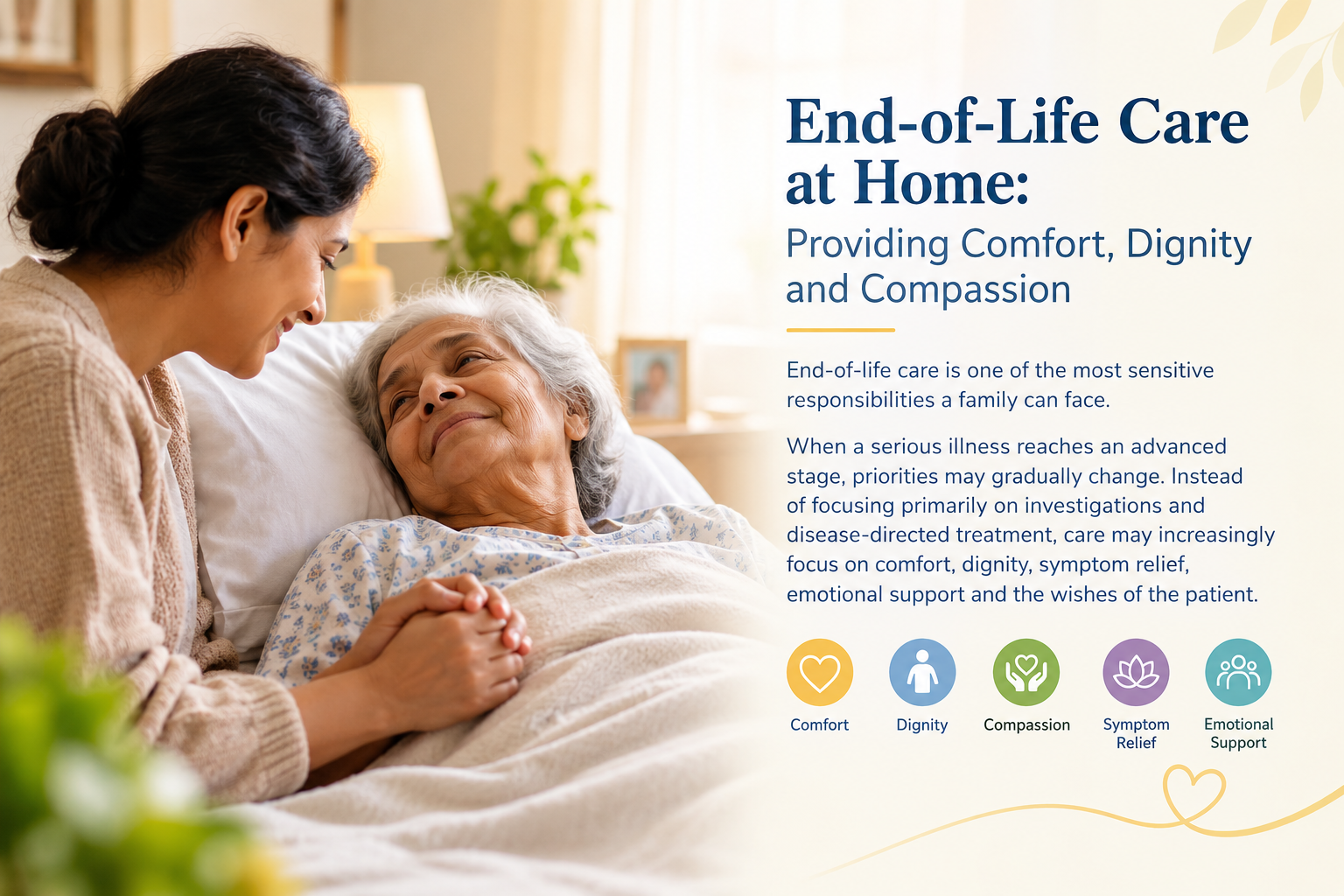
End-of-life care is one of the most sensitive responsibilities a family can face.
When a serious illness reaches an advanced stage, priorities may gradually change. Instead of focusing primarily on investigations and disease-directed treatment, care may increasingly focus on comfort, dignity, symptom relief, emotional support and the wishes of the patient.
For some families, being able to provide this care at home is deeply meaningful.
End-of-life care at home aims to make the final phase of life as comfortable, peaceful and dignified as possible while ensuring that the patient and family have appropriate medical and emotional support.
End-of-life care refers to care provided when a person is approaching the final stage of life.
It may be required because of:
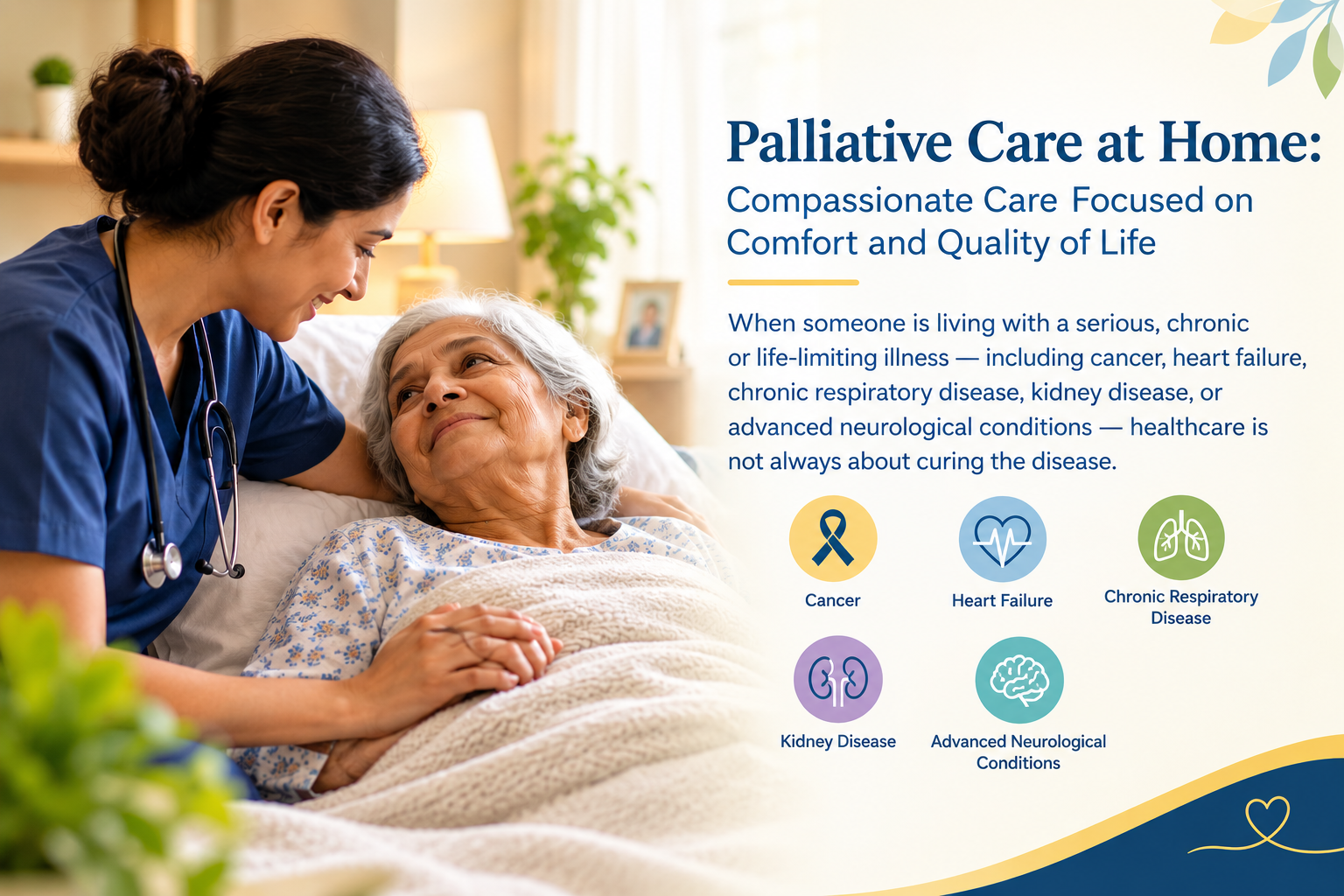
End-of-life care is a component of palliative care, but palliative care itself can begin much earlier in the course of serious illness.
Many people prefer to spend their final phase of life in familiar surroundings, close to family.
Home may provide:
WHO emphasizes the importance of community and home-based palliative care and notes that many people requiring palliative care prefer to remain at home.
However, home end-of-life care should be planned carefully, particularly when the patient has complex symptoms or significant medical needs.
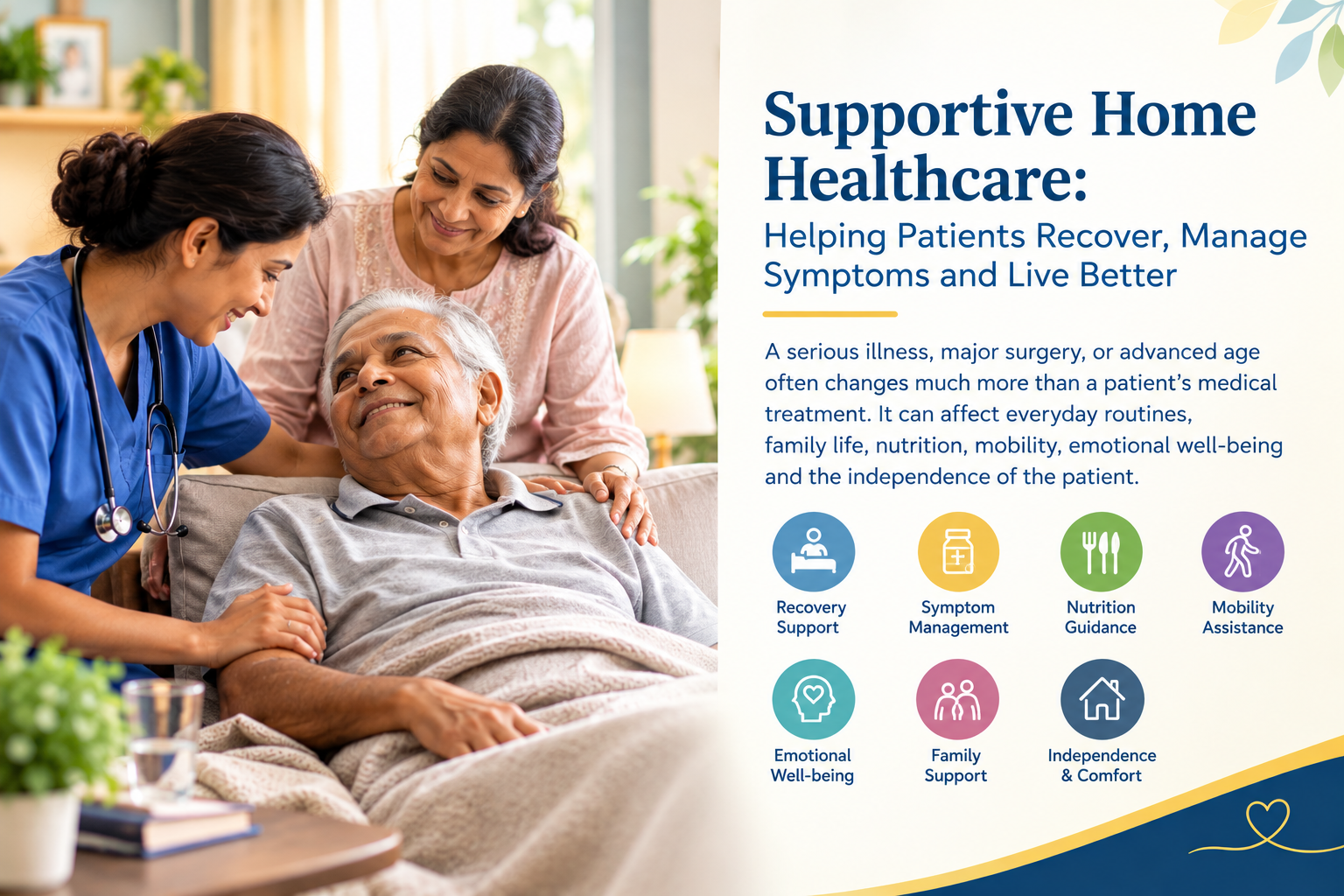
A comprehensive home-based programme may involve several services.
Doctors can assess symptoms, review medications, discuss changes in the patient’s condition and coordinate the overall plan of care.
Home nurses can provide bedside support, medication-related assistance, hygiene care, wound care, catheter care, feeding support and monitoring.
Symptoms such as pain, breathlessness, nausea, anxiety, restlessness and other forms of distress should be assessed and treated appropriately.
Medication should only be used according to a qualified healthcare professional’s prescription and care plan.
As illness progresses, patients may need help with:
Maintaining cleanliness and dignity is an essential part of compassionate care.
Patients who become mostly bedbound can be vulnerable to skin breakdown and pressure injuries.
A home healthcare team can educate caregivers about:
Early recognition of skin changes can allow the healthcare team to intervene promptly.
Breathlessness can be frightening for patients and families.
The cause should be medically assessed, particularly when symptoms are new, severe or rapidly worsening.
Depending on the patient’s diagnosis and care plan, management may include prescribed medication, positioning, oxygen when clinically indicated and other supportive measures.
Families should have clear instructions regarding when to contact the treating doctor or seek urgent medical assistance.
Eating patterns can change significantly as a person approaches the end of life.
A patient may have less appetite, eat smaller amounts or eventually lose interest in food.
Families can find this emotionally difficult.
The approach should be guided by the patient’s condition, comfort, preferences and medical advice. Food and fluids should not be forced when a person is unable or unwilling to take them.
The emphasis may shift toward comfort and dignity rather than trying to maintain normal eating patterns at all costs.
End-of-life care is not only medical.
Patients may experience:
A compassionate care team should create space for these concerns.
Listening can sometimes be as important as treatment.
Families often become the primary caregivers during end-of-life care.
They may experience exhaustion, uncertainty and emotional distress.
A professional home healthcare team can help by teaching caregivers how to:
Caregiver support is an important part of quality end-of-life care.
Whenever possible, discussions about the patient’s preferences should happen before a crisis.
These conversations may include:
Such discussions should be handled sensitively and in accordance with applicable medical and legal requirements.
Planning should ideally begin before an emergency occurs.
A family may benefit from discussing home-based end-of-life care when:
Early planning allows the family to arrange nursing, medical support, equipment, medications, emergency contacts and caregiver training.
End-of-life care is not about doing less.
It is about doing what matters most.
Sometimes that means controlling pain.
Sometimes it means helping a patient breathe more comfortably.
Sometimes it means keeping the patient clean and comfortable.
Sometimes it simply means making sure a loved one is not alone.
Professional home healthcare can help families navigate this difficult period with greater confidence while keeping the patient’s comfort, dignity and wishes at the centre of care.
Every person deserves compassionate care—and every family deserves support while providing it.
Comments (1)
Bhupender singh
August 04, 2026This is good blog to gain knowledge..